Lower back pain is one of the most common problems faced by office workers and people who spend long hours sitting at a desk. Sitting for extended periods can place excessive pressure on the spine, weaken muscles, reduce blood circulation, and lead to stiffness in the lower back.
Poor posture, an uncomfortable chair, lack of movement, and improper workstation setup can make the problem even worse. Over time, daily discomfort may begin to affect productivity, sleep quality, and overall health.
Fortunately, there are several effective ways to relieve lower back pain caused by sitting all day at work. Small changes in posture, movement, and workplace habits can significantly improve spinal health and reduce discomfort.
Understand Why Sitting Causes Lower Back Pain
When you sit for long periods, especially with poor posture, the muscles supporting your spine become strained. Sitting also increases pressure on the lower back discs more than standing does.
Common causes of lower back pain from sitting include:
- Slouching while working
- Weak core muscles
- Tight hip muscles
- Lack of movement during the day
- Poor ergonomic setup
- Sitting in the same position for hours
Understanding the cause of the pain is the first step toward finding relief.
Improve Your Sitting Posture
Maintaining proper posture is one of the most important ways to reduce lower back pain at work.
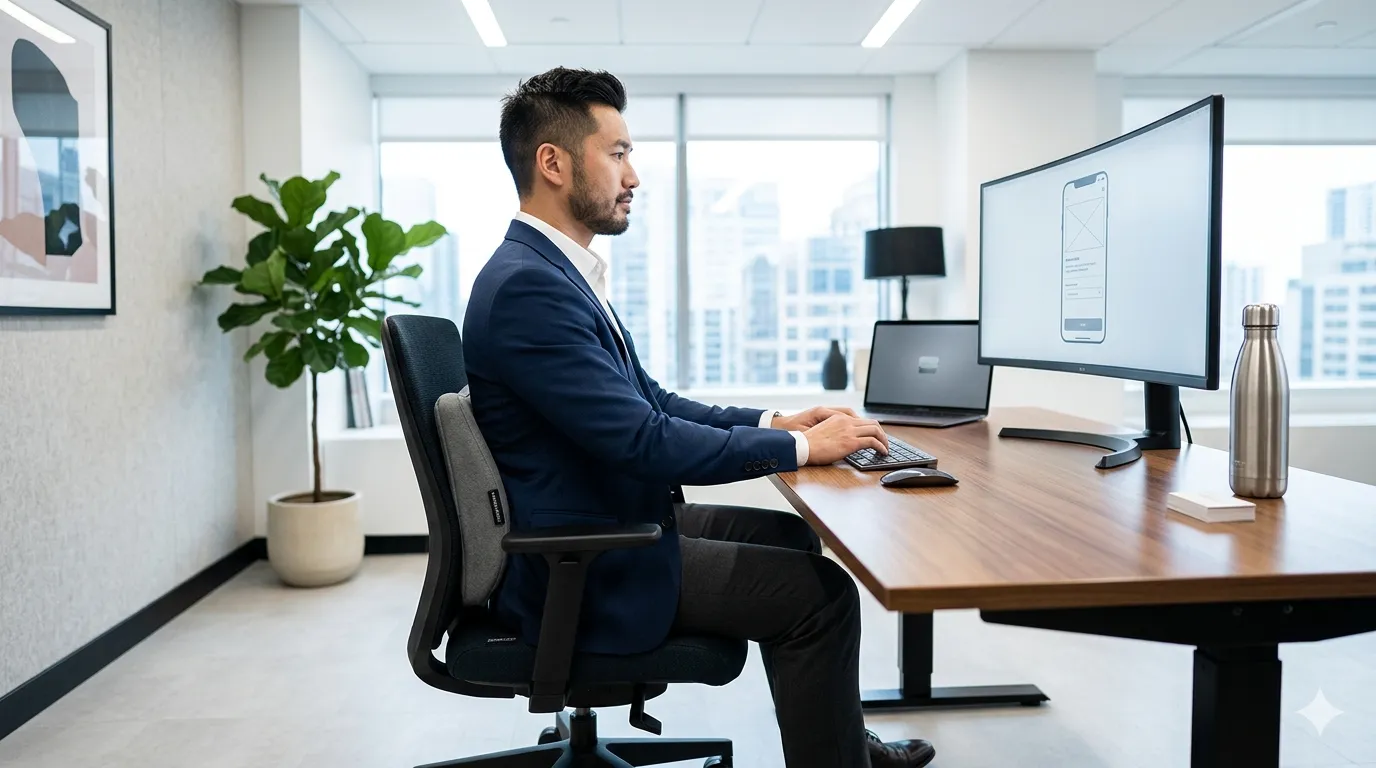
Keep your back straight and shoulders relaxed while sitting. Your feet should rest flat on the floor, and your knees should remain at a 90-degree angle. Avoid leaning forward toward the computer screen for long periods.
Your computer monitor should be at eye level so you do not strain your neck or upper back. Keeping your posture aligned reduces pressure on the spine and helps prevent muscle fatigue.
Use an Ergonomic Chair
A supportive chair can make a major difference in reducing lower back pain.
Choose a chair with:
- Proper lumbar support
- Adjustable height
- Comfortable cushioning
- Armrests for shoulder support
The lower back should be fully supported while sitting. If your chair does not provide enough lumbar support, placing a small pillow or rolled towel behind the lower back may help maintain the natural curve of the spine.
Take Frequent Movement Breaks
Sitting continuously for hours can tighten muscles and reduce circulation. One of the simplest ways to relieve back pain is to stand up and move regularly.
Try to:
- Stand every 30 to 60 minutes
- Walk around the office
- Stretch for a few minutes
- Change sitting positions frequently
Even short movement breaks can relax stiff muscles and reduce pressure on the lower back.
Stretch Your Lower Back and Hips
Stretching helps improve flexibility, reduce muscle tension, and increase blood flow to the back muscles.
Helpful stretches include:
- Knee-to-chest stretch
- Cat-cow stretch
- Seated spinal twist
- Hamstring stretch
- Hip flexor stretch
Performing gentle stretches during work breaks can reduce stiffness caused by prolonged sitting.
Strengthen Core Muscles
Weak abdominal and core muscles can increase stress on the lower back. Strengthening these muscles helps support the spine and improve posture.
Simple exercises that help strengthen the core include:
- Planks
- Bridges
- Pelvic tilts
- Bird-dog exercises
Regular exercise can improve spinal stability and reduce recurring back pain over time.
Adjust Your Workstation Properly
An improperly arranged desk setup often contributes to poor posture and back strain.
For a healthier workstation:
- Keep the monitor directly in front of you
- Position the keyboard and mouse within easy reach
- Avoid bending or twisting frequently
- Keep elbows close to the body
A properly adjusted workspace encourages better posture and reduces unnecessary strain on the back and neck.
Try Heat Therapy
Applying heat to the lower back can relax tight muscles and improve circulation.
Use:
- A heating pad
- Warm towel
- Hot water bottle
Apply heat for 15 to 20 minutes after work or during breaks if possible. Heat therapy is especially helpful for muscle stiffness and tension caused by sitting all day.
Stay Physically Active Outside Work
Long office hours should be balanced with regular physical activity.
Walking, swimming, yoga, cycling, and stretching exercises can strengthen muscles, improve flexibility, and support spinal health. Staying active also helps prevent weight gain, which can place additional stress on the lower back.
Even 20 to 30 minutes of daily exercise can help reduce chronic back discomfort.
Maintain a Healthy Weight
Excess body weight, especially around the abdomen, increases pressure on the spine and lower back muscles.
Maintaining a healthy diet and active lifestyle can reduce spinal stress and improve overall posture. Eating nutritious foods also supports muscle and joint health.
Use a Standing Desk if Possible
Alternating between sitting and standing throughout the workday can reduce pressure on the lower back.
Standing desks allow better movement and help improve posture. However, standing for too long without breaks can also cause discomfort, so balance is important.
Switching positions regularly may help reduce stiffness and muscle fatigue.
Stay Hydrated
The spinal discs need proper hydration to maintain flexibility and cushioning. Dehydration can contribute to muscle tightness and discomfort.
Drinking enough water throughout the day supports overall muscle and joint health and may help reduce stiffness.
Manage Stress Levels
Stress can increase muscle tension, especially in the neck, shoulders, and lower back.
Relaxation techniques such as deep breathing, meditation, stretching, or short walks can help reduce tension and improve comfort during work hours.
Mental stress and physical discomfort are often closely connected.
When to See a Doctor
Most mild lower back pain improves with lifestyle changes and home care. However, medical attention may be necessary if:
- Pain becomes severe
- Symptoms last for several weeks
- Numbness or tingling develops
- Pain spreads down the legs
- Walking becomes difficult
A healthcare professional can identify underlying conditions and recommend proper treatment if needed.
Final Thoughts
Lower back pain from sitting all day at work is a common issue, but it can often be managed with simple daily habits. Improving posture, taking movement breaks, stretching regularly, and maintaining an ergonomic workspace can significantly reduce discomfort.
Staying physically active, strengthening core muscles, and avoiding prolonged sitting are key steps for long-term spinal health. Small changes in your daily routine can make a big difference in preventing and relieving lower back pain while working.